



I really appreciate the discounts you provide to customers and the free shipping on some orders is an added bonus.
Keep up the great customer service, it is appreciated.
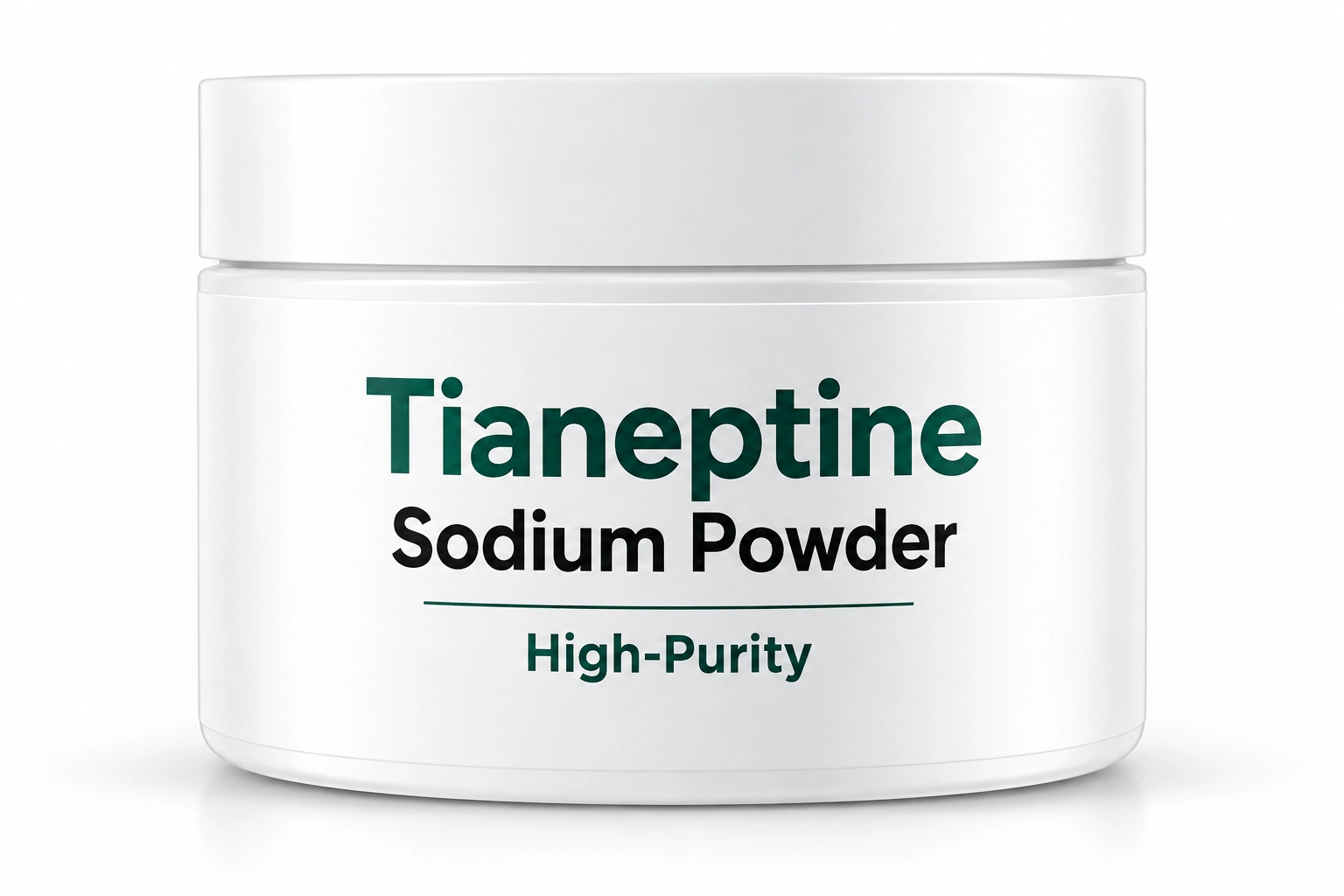
Price range: $210.00 through $4,050.00
Bulk deal
| Quantity | Discount | Discounted price |
| 2 - 3 | 5% | - |
| 4 - 6 | 10% | - |
| 6 - 8 | 15% | - |
| 8 - 11 | 20% | - |
| 12 - 20 | 30% | - |
Description
Complete Product Description
Tianeptine Sodium powder is a widely studied atypical tricyclic compound utilized primarily in biochemical research, analytical reference testing, and laboratory synthesis. Characterized by its rapid solubility profile in aqueous solutions, the sodium salt form serves as a baseline standard in comparative chemical analyses alongside sulfate and free acid variants.
This material is supplied strictly as a bulk chemical reference standard for qualified laboratory, institutional, and research applications.
Chemical Properties & Specifications
Understanding the molecular characteristics of Tianeptine Sodium is critical for accurate experimental design and analytical setup.
- Chemical Formula: C19H17ClN2O4S·Na
- CAS Number: 30123-17-2
- Physical Appearance: White to off-white hygroscopic powder
- Solubility: Highly soluble in water and ethanol; sparingly soluble in non-polar organic solvents
- Storage Requirements: Keep tightly sealed in a cool, dry place away from ambient moisture
Note: Specific lot purity percentages, Certificates of Analysis (COA), and heavy metal testing documentation should be verified on a batch-by-batch basis prior to experimental execution.
Comparing Tianeptine Salts: Sodium vs. Sulfate vs. Free Acid
When selecting bulk tianeptine material for research modeling, researchers frequently evaluate the differences in stability, solubility, and molecular weight across available chemical forms:
- Tianeptine Sodium Powder: Features the fastest dissolution rate in water due to its salt structure. However, it is highly hygroscopic (absorbs atmospheric moisture rapidly), requiring climate-controlled storage.
- Tianeptine Sulfate Powder: Engineered for greater structural stability, this form exhibits lower hygroscopicity and a slower dissolution profile in liquid media.
- Tianeptine Free Acid Powder: Lacks the sodium salt group, resulting in significantly lower water solubility. It is often evaluated in non-aqueous protocols or custom solvent mixtures.
Laboratory Handling and Storage Guidelines
Because Tianeptine Sodium powder readily absorbs ambient moisture, improper exposure can cause clumping or degradation over time. Adhere to the following laboratory procedures to maintain compound integrity:
- Moisture Control: Store in a sealed container with a desiccant pack immediately after unsealing.
- Temperature: Maintain standard room temperature ($20\text{°C}$ to $25\text{°C}$) away from direct heat sources and light exposure.
- Handling Protocols: Utilize appropriate personal protective equipment (PPE), including nitrile gloves, protective eyewear, and a lab coat, to prevent inhalation or skin contact during mass measurement.
Regulatory and Safety Compliance
This compound is intended strictly for laboratory research, analytical testing, and chemical synthesis by qualified professionals. It is not intended, labeled, or approved for human consumption, medical diagnosis, or therapeutic use. Buyers are responsible for ensuring compliance with local, state, and national chemical regulations within their jurisdiction prior to purchase.
FAQ Section
What is the primary difference between Tianeptine Sodium and Tianeptine Sulfate?
The main operational difference lies in solubility and hygroscopicity. Tianeptine Sodium dissolves rapidly in water but readily absorbs air moisture, while Tianeptine Sulfate dissolves much more slowly and remains stable when exposed to air.
How should Tianeptine Sodium powder be stored to prevent clumping?
Store the powder in its original airtight packaging alongside a silica desiccant pouch. Keep the container in a cool, dark environment to protect the compound from humidity and UV light.
Is Tianeptine Sodium soluble in alcohol?
Yes, Tianeptine Sodium exhibits high solubility in both water and ethanol, making it suitable for liquid-phase analytical assays.
Can Tianeptine Sodium powder be supplied with a Certificate of Analysis (COA)?
Batch-specific COAs detailing purity levels and testing data should be requested directly from your chemical supplier prior to placing a research order.
Additional information
| QUANTITY | 20g, 50g, 100g, 500g |
|---|
Related products

New


ALL PRODUCT
Price range: $260.00 through $1,300.00
This product has multiple variants. The options may be chosen on the product page